ServicesSalt Delivery
Automated Salt Delivery in Tolleson
Without dissolved salt in the brine tank, a water softener cannot recharge its resin, and hard water slips straight through. We bring salt on a schedule set by your home's real usage, fill the tank, probe for bridging and mushing, and record what we see each visit.
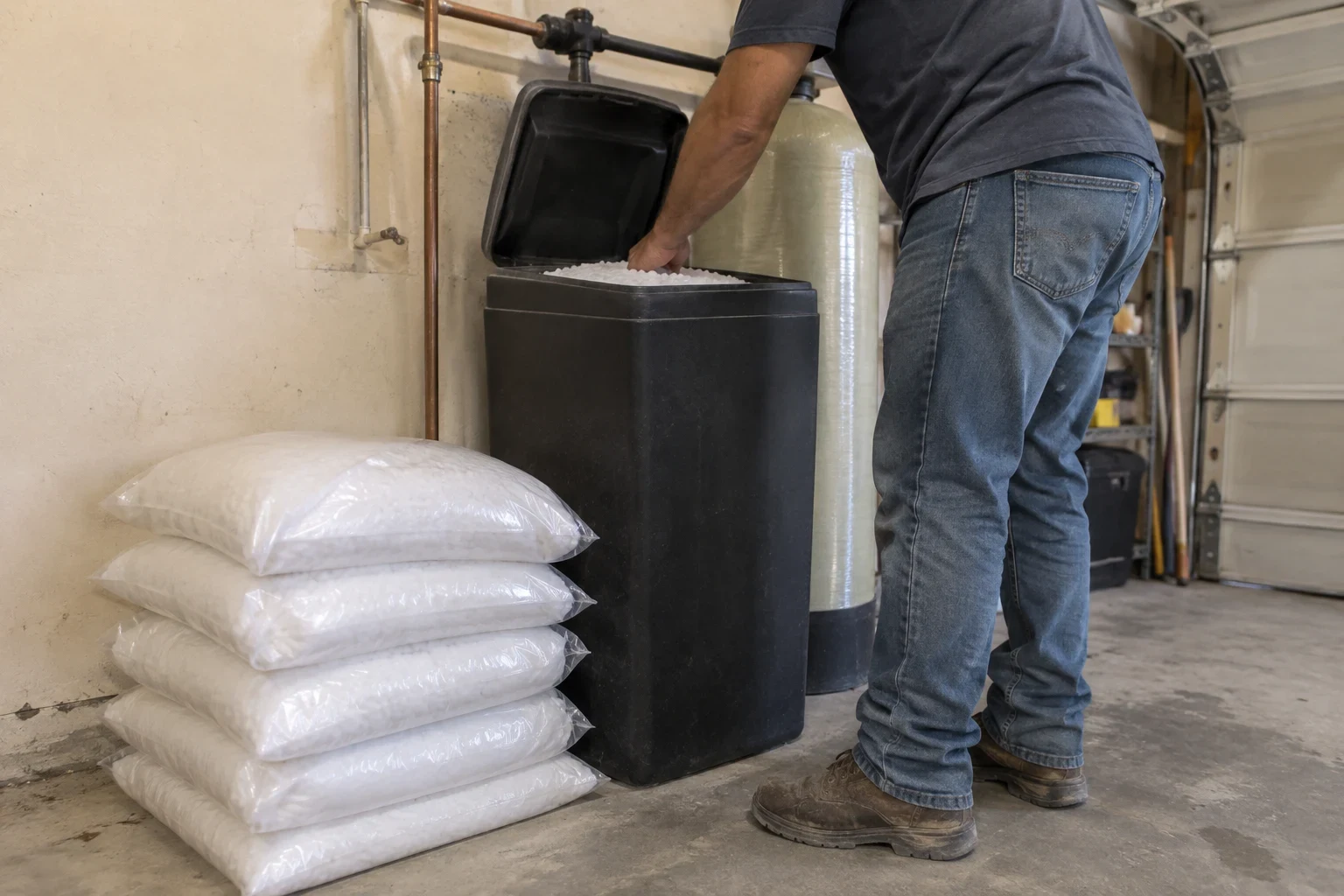
Why a Softener Runs Out of Salt Without Warning
A softener cleans its resin bed by flushing it with brine during regeneration. The brine comes from salt dissolving in the tank. When the salt runs low, or forms a hard crust that water cannot reach, the valve still cycles but the resin never recharges. Hard water then flows straight through to your fixtures and water heater, and most people only notice when spots return to the shower glass.
Automated salt delivery removes that gap. We learn how fast your system goes through salt, set a delivery interval, and handle the lifting and the checking. Many softeners in the area sit in garages, where summer heat and humidity swings make bridging more likely, so a set of eyes on the tank each visit matters as much as the salt itself.
We also keep a simple record of each delivery: salt level on arrival, amount added and anything unusual around the tank. If a leak or failure ever leads to water damage, dated notes and photos give you something concrete to show your insurer. We do not decide claims, but we can help you document what happened.
What Each Delivery Includes
Salt carried in and poured
We bring the bags to the softener and fill the brine tank to the right height. You do not lift a 40-pound bag or store a pallet in the garage.
Bridge and mush check
We probe the salt for a hollow crust, called a bridge, and break it up if we find one. We also look for mushing, the fine sludge that settles at the bottom and can clog the brine well.
Tank and fitting inspection
We look at the brine line, overflow fitting and the floor around the tanks for drips or mineral trails. Small seeps are easier to fix before they stain drywall or soak a cabinet base.
Usage tracking
We note how much salt went in since the last visit. If consumption jumps or drops sharply, that usually points to a settings change, a stuck float or a valve problem worth a closer look.
A written visit note
Every delivery ends with a short note of what we did and saw, plus photos when something looks off. Keep them with your home records.
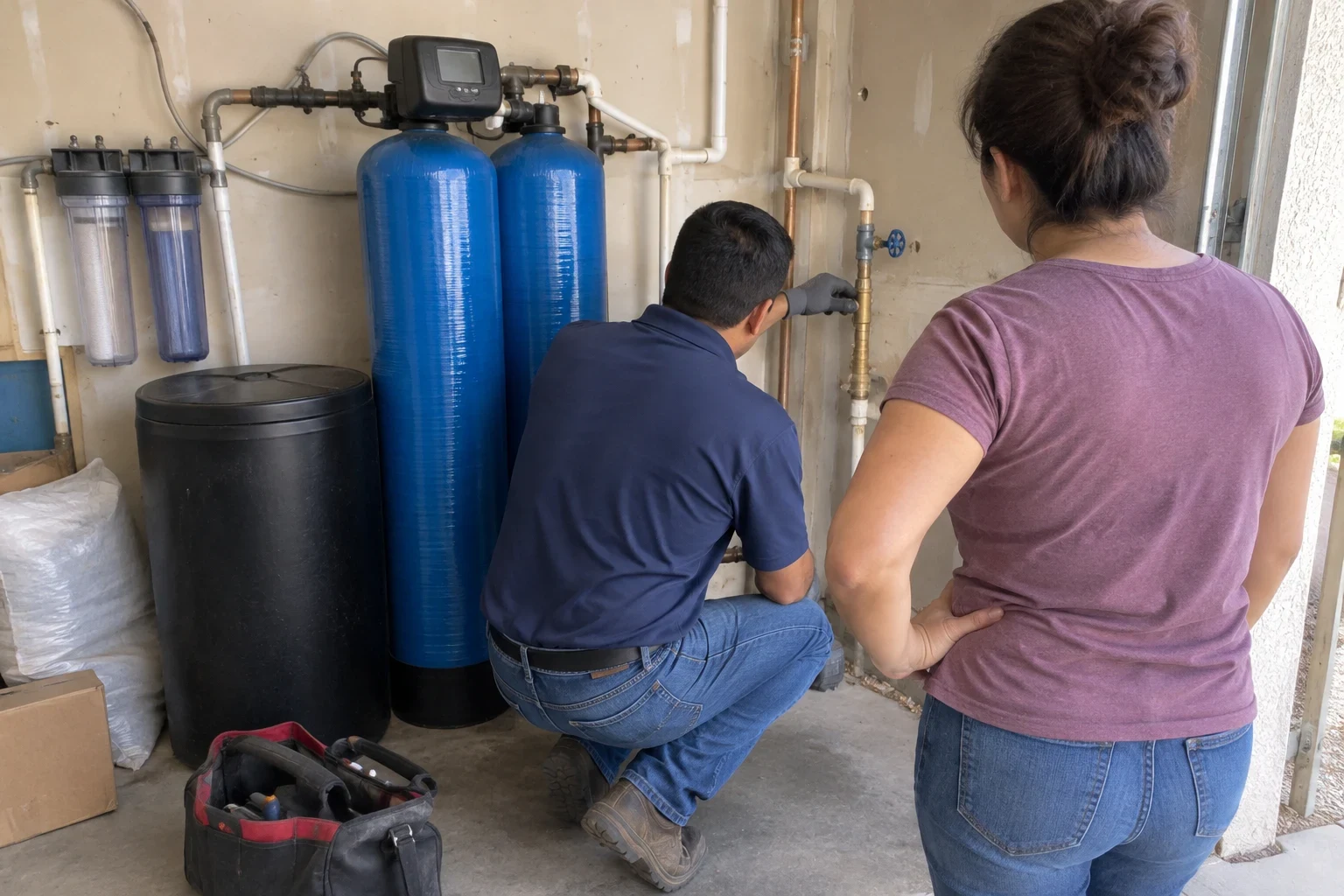
Signs Salt Delivery Would Help Your Home
- Spots and scale are back
- White film on faucets and glassware after a stretch of soft water often means the tank ran dry or bridged. The resin stopped recharging weeks before you noticed.
- You forget to check the tank
- Most brine tanks hold several weeks of salt, which is long enough to lose track. A schedule takes the memory work away.
- Lifting bags is a chore
- Salt bags are heavy and awkward to pour over a tank rim. If that job keeps getting put off, delivery fixes it.
- Salt level never seems to drop
- A tank that stays full while the water turns hard is a classic bridge. The crust looks like salt on top, with empty space underneath.
- Standing water in the brine tank
- A few inches of water near the bottom is normal for many units. Water sitting high over the salt can mean a clogged brine line or a float issue.
How We Set Up and Run Your Deliveries
- 1
A phone call to start
Tell us your softener brand, tank size if you know it, how many people live in your home and what salt you use now. We talk through access, such as a side gate or garage, so we can reach the tank.
- 2
First visit baseline
We check the brine tank condition, break up any existing bridge and fill it. We note the regeneration setting on the valve so we can estimate how fast salt will be used.
- 3
Setting the interval
Based on that baseline we pick a delivery rhythm. After a couple of visits we adjust it to match what your system really consumes.
- 4
Routine visits
Each delivery follows the same steps: measure, inspect, fill, record. You get the visit note so you always know where things stand.
What Moves the Cost of Salt Delivery
The price is built from the salt your system uses and the work of getting it there. We explain the pieces on the phone before your first delivery, and changes to the schedule are your call.
- How much salt you use
- Household size, water use and the softener's regeneration settings set the consumption rate. An older timer-based valve often burns more salt than a metered one.
- Type of salt
- Evaporated pellets, solar crystals and potassium chloride all cost different amounts. Potassium chloride is the pricier choice for homes limiting sodium.
- Delivery frequency
- More frequent, smaller drops and less frequent, larger fills price differently. We size the interval to avoid both empty tanks and overfilled ones that mush.
- Access to the tank
- A softener just inside a garage door is quick to service. Long carries, tight closets or locked gates add time.
Common Questions About Softener Salt Service
- Does someone have to be there when you drop off salt?
- In most cases, no. If your softener sits in a garage or a side yard we can get to, we agree on access with you once by phone and use that same arrangement every visit. If the unit is inside the living space, we book each visit for a time when someone is at home.
- Can you service a softener another company installed?
- Yes. Nearly all standard softeners take the same salt types, and our brine tank checks work on any brand. If your unit is getting old, we can discuss water softener installation, but salt delivery does not require it.
- What kind of salt is best for my system?
- Evaporated pellets are the purest option and leave the least insoluble residue, so they mush less. Solar crystals do fine in many units. Potassium chloride suits homes cutting back on sodium, though the valve usually needs a higher salt dose setting to regenerate properly.
- What do you do if there is a leak around the softener?
- We pause the delivery, take photos and note where the water is coming from and what it has touched. You get that record the same day. If you choose to open an insurance claim, the dated notes help show when the issue was found, but whether it is covered depends on your insurer and your policy.
- Can I skip a delivery or change how often you come?
- Yes. If you will be away for a while or the number of people in your home changes, give us a call and we will shift the interval or hold off on the next visit.
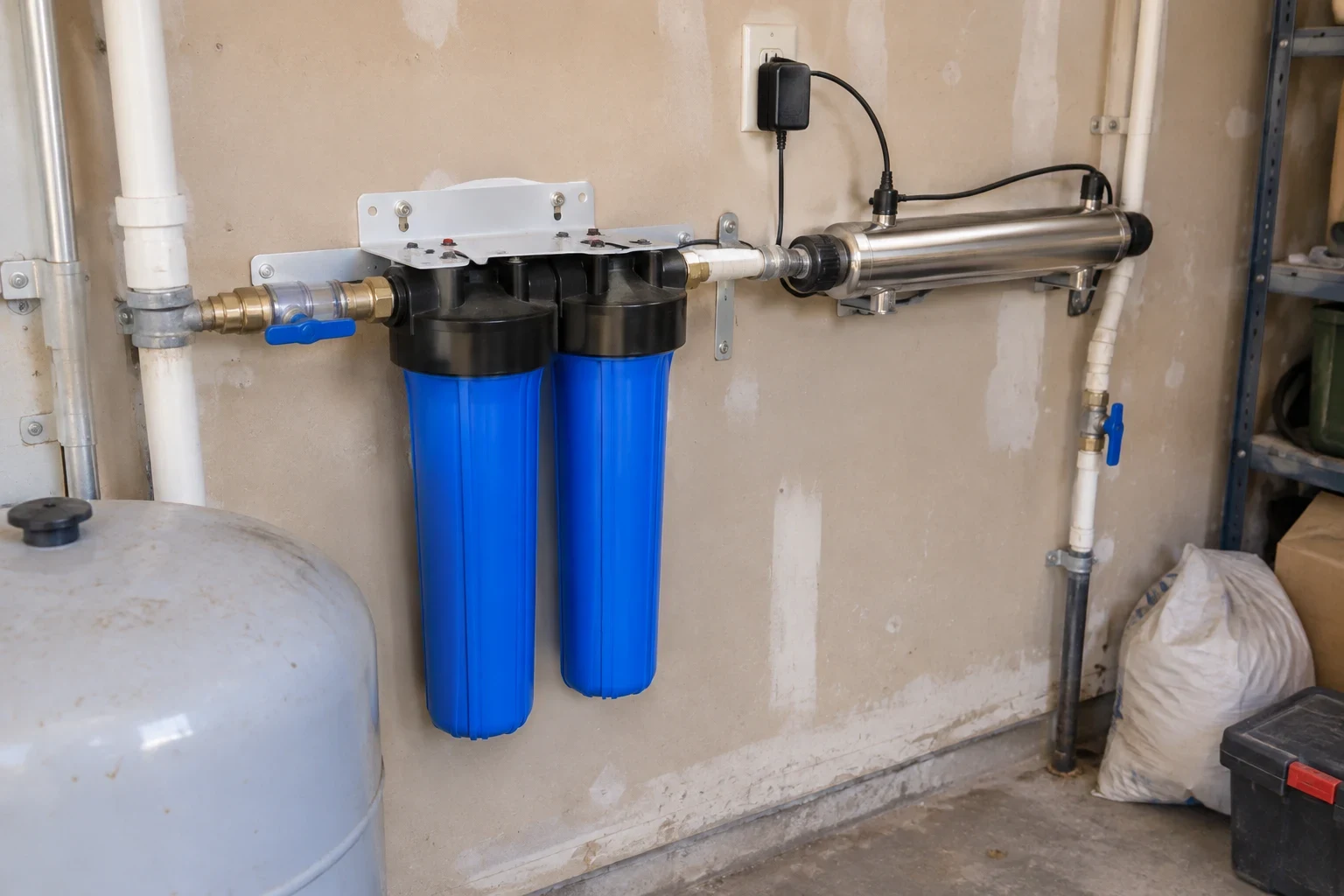
Stop Running Out of Softener Salt
Give us a call with your softener details and we will set a delivery schedule that fits how your home uses water. We handle the bags, the checks and the notes from there.