ServicesWater Softener Installation
Water Softener Installation in Tolleson
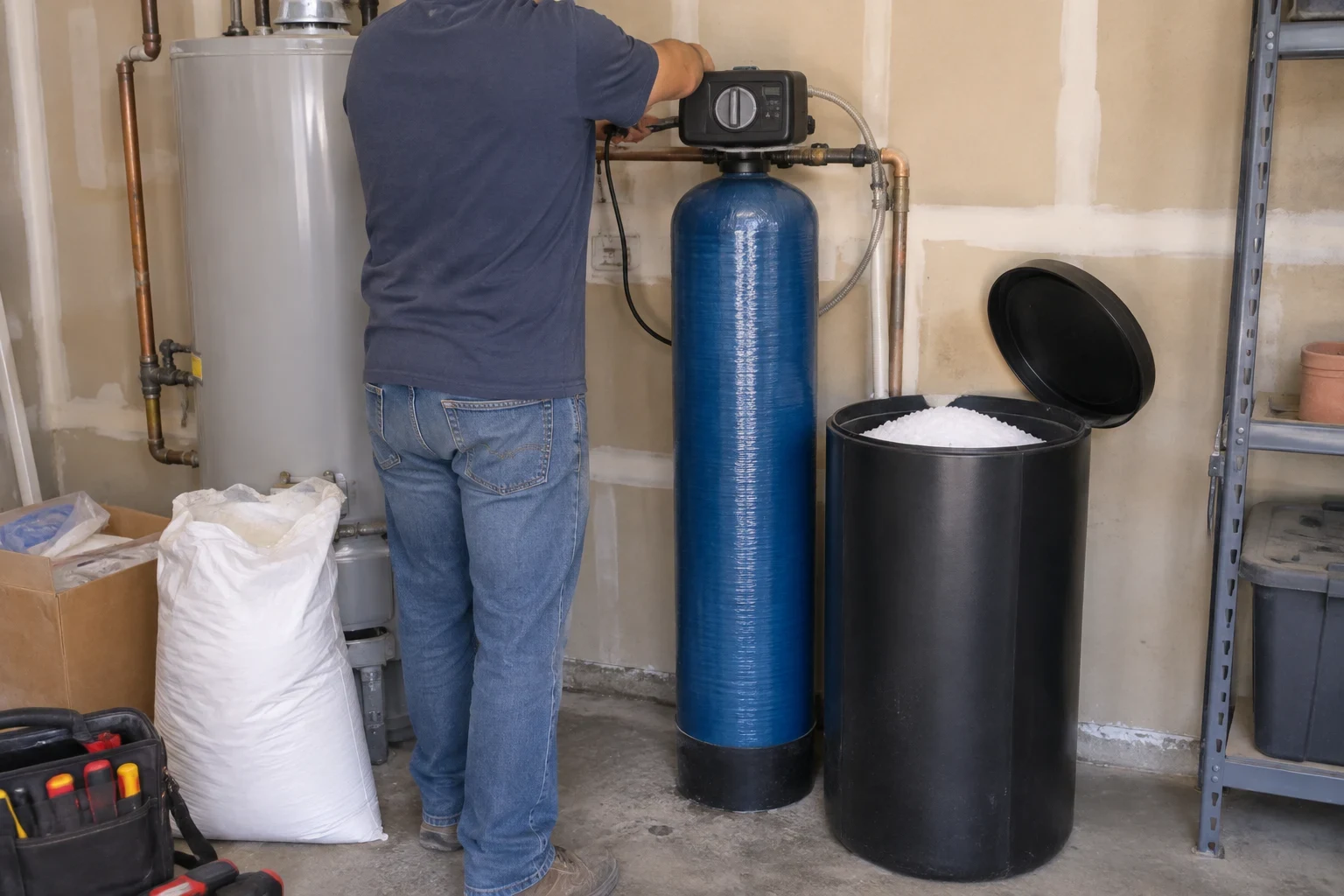
We install water softeners sized to how much water your home actually uses, plumbed into your softener loop or main line with a proper bypass and drain. You get softer water at every tap and less scale building up inside your water heater and fixtures.
What a Softener Does and When It Makes Sense
Hard water carries dissolved calcium and magnesium. When that water is heated or left to dry, the minerals come back out of solution as scale: a crust on faucets, a haze on shower glass and a layer of sediment at the bottom of a tank water heater. A softener removes those minerals before they reach your pipes. Water passes through a tank packed with charged resin, which holds onto the calcium and magnesium and releases sodium or potassium in their place, so there is nothing left to build scale.
Hardness runs high across the West Valley, so many homes here already have a softener loop stubbed out in the garage. When that loop is in place, installation is mostly a clean connection. When it isn't, we route the main line to the unit and add a loop that meets code.
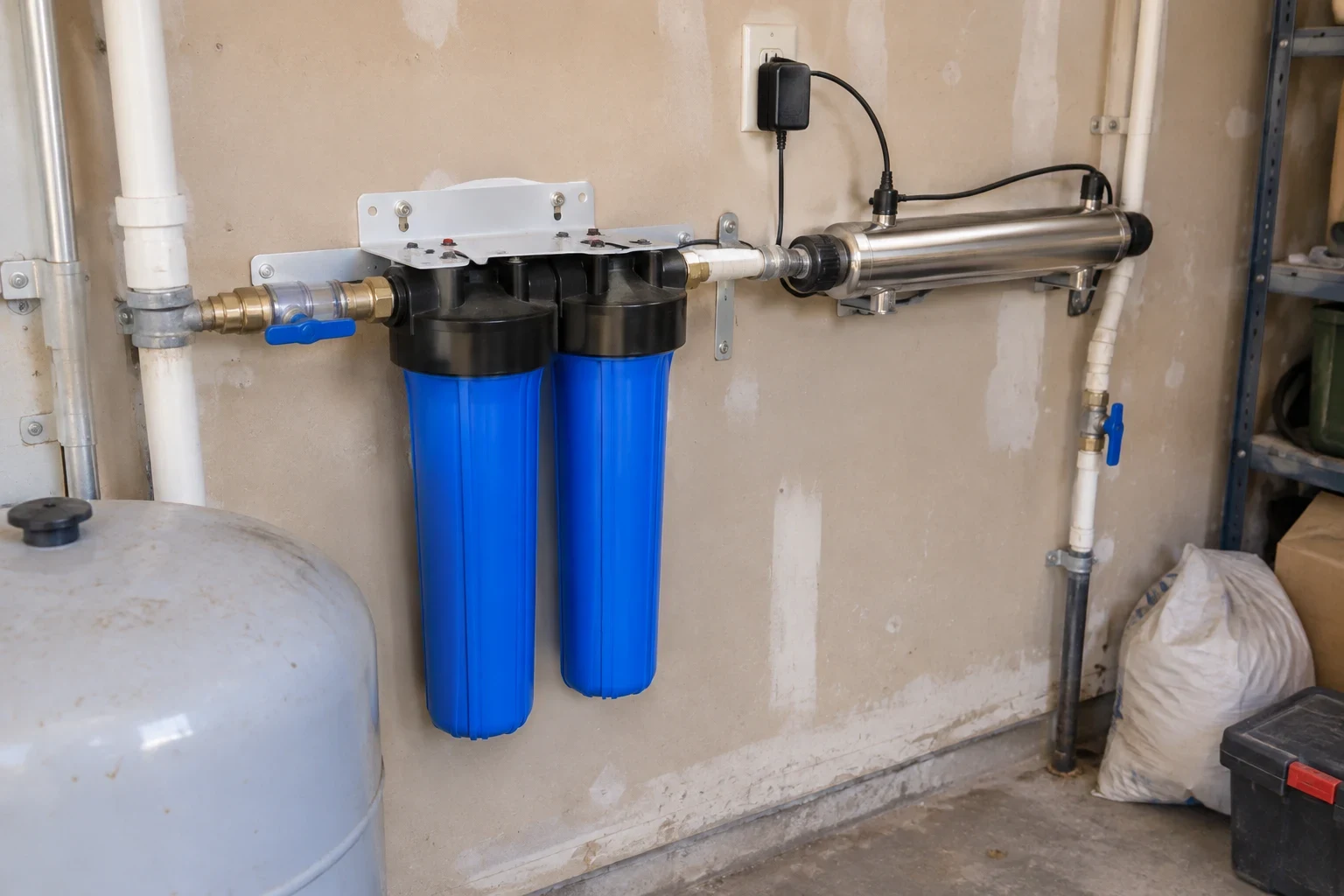
A softener and a filter solve different problems. Softening does nothing for chlorine taste or trace contaminants. For those, see our Whole-Home Filtration and Reverse Osmosis System pages.
What the Installation Includes
Sizing by grain capacity
We work out capacity from the published hardness for your water supply, the number of people in your home and typical daily use. An undersized unit regenerates too often and wastes salt. An oversized one lets the resin sit and channel.
Resin tank and brine tank
We set the mineral tank with its resin bed and the salt tank on a level, dry base, and connect the brine line between them.
Control valve and bypass
We mount a metered control valve that regenerates based on gallons used, not a fixed calendar. A bypass valve lets you shut the softener out of the system without cutting water to the house.
Drain line with an air gap
Backwash water discharges to a standpipe or approved drain through an open air gap. That break in the line keeps used rinse water from ever being drawn back into the pipes you drink from.
Startup and programming
We flush the resin, check for leaks at every fitting, set the hardness and regeneration time, and fill the brine tank with salt.
Old unit removal
If you're replacing a softener, we disconnect it, cap what needs capping and take it with us.
When Hard Water Is Costing You
Chalky rings at the faucet
A white, gritty edge on aerators, showerheads and drains is calcium carbonate. It stays behind every time a drop of water evaporates.
Dishes that come out spotted
If glasses look cloudy even after a full dishwasher cycle, dissolved minerals are reacting with the detergent and drying onto the surface.
Popping from the water heater
Rumbling or crackling usually points to scale settled on the tank floor. Water trapped beneath that layer boils in bursts, which puts extra strain on the burner or lower element.
Soap that won't lather
Calcium and magnesium bind with soap and turn it into curd. You use more shampoo and detergent, and a sticky film stays on skin and hair after you rinse.
A softener that quit doing its job
A salt level that never goes down, or water standing high in the brine tank, usually means the control valve or injector has failed. On an older unit, replacing it often costs less over time than hunting down parts.
How Installation Day Runs
- 1
A phone conversation first
We ask about your household size, where the loop or main line sits, and whether an outlet and drain are nearby. That lets us bring the right unit and fittings.
- 2
Shutoff and tie-in
We shut off the main, cut in at the loop or main line, and install the bypass valve. Floors and walkways get covered before any pipe is opened.
- 3
Setting the tanks and drain
The resin and brine tanks go in place, the drain line runs to an air gap, and the brine overflow gets its own line.
- 4
Flush, program and check
We backwash the resin, pressure test the connections and program the valve. Before we leave, we show you the bypass, how to add salt and what normal regeneration sounds like.
What Moves the Price
Most of the cost comes down to the unit's capacity and how much plumbing your home needs to receive it. We explain each line on the phone so the number makes sense before we schedule anything.
- Loop or no loop
- A pre-plumbed loop keeps labor short. Running new pipe from the main line to the garage adds material and time.
- Grain capacity and valve
- Larger households need larger resin tanks. A metered valve costs more than a timer valve but uses less salt and water.
- Drain and power access
- If there's no standpipe or outlet near the install spot, we have to extend one.
- Removing an old system
- Hauling away an old softener, or repairing corroded fittings left behind, adds some work.
Water Softener Installation Questions
Something not covered here? (623) 246-4434
How long does installation take?
With an existing loop, most installs take a few hours, including flushing and programming. Homes that need new pipe run from the main line take longer. You'll be without water only while the main is shut off for the tie-in.
Water from my old softener soaked the floor. Will you document it for my insurer?
Yes. Before we pull the old unit, we photograph the failed part, where the water escaped and the damage we can see, then write a short account of what broke and the likely cause. That record is yours to hand to your insurance company. We aren't the adjuster and won't guess at what your policy pays, but an adjuster works faster from clear photos and a plain explanation.
Can a softener sit in a hot garage?
Yes, as long as it's out of direct sun and off bare ground. Heat and humidity can cause salt to bridge into a hard crust in the brine tank, so we show you how to check for it and break it up.
Is softened water okay to drink?
Softening adds a small amount of sodium, roughly in proportion to how hard the water was. If you'd rather avoid it, an under-sink Reverse Osmosis System removes most of it at the kitchen tap. Potassium chloride also works in place of salt.
Do outdoor hose bibs get softened water?
Usually not. Most loops leave the front hose bib and irrigation on hard water so you aren't spending salt on landscaping. We confirm how your home is plumbed before we start.
Do I have to keep buying and hauling salt?
Someone has to keep the brine tank filled. Our Automated Salt Delivery service handles that on a schedule, so you're not lifting heavy bags.
Ready for Softer Water at Every Tap
Tell us how many people live in your home and where the loop or main line is. We'll recommend a capacity and give you a quote by phone.