ServicesReverse Osmosis System
Reverse Osmosis System for Tolleson Kitchens
Our under-sink reverse osmosis setups send your drinking water through sediment, carbon and membrane stages, then out a faucet of its own. The result is water with no chalky mineral edge or chlorine note, plumbed neatly into a cabinet that stays dry and easy to check.
How Reverse Osmosis Cleans Your Drinking Water
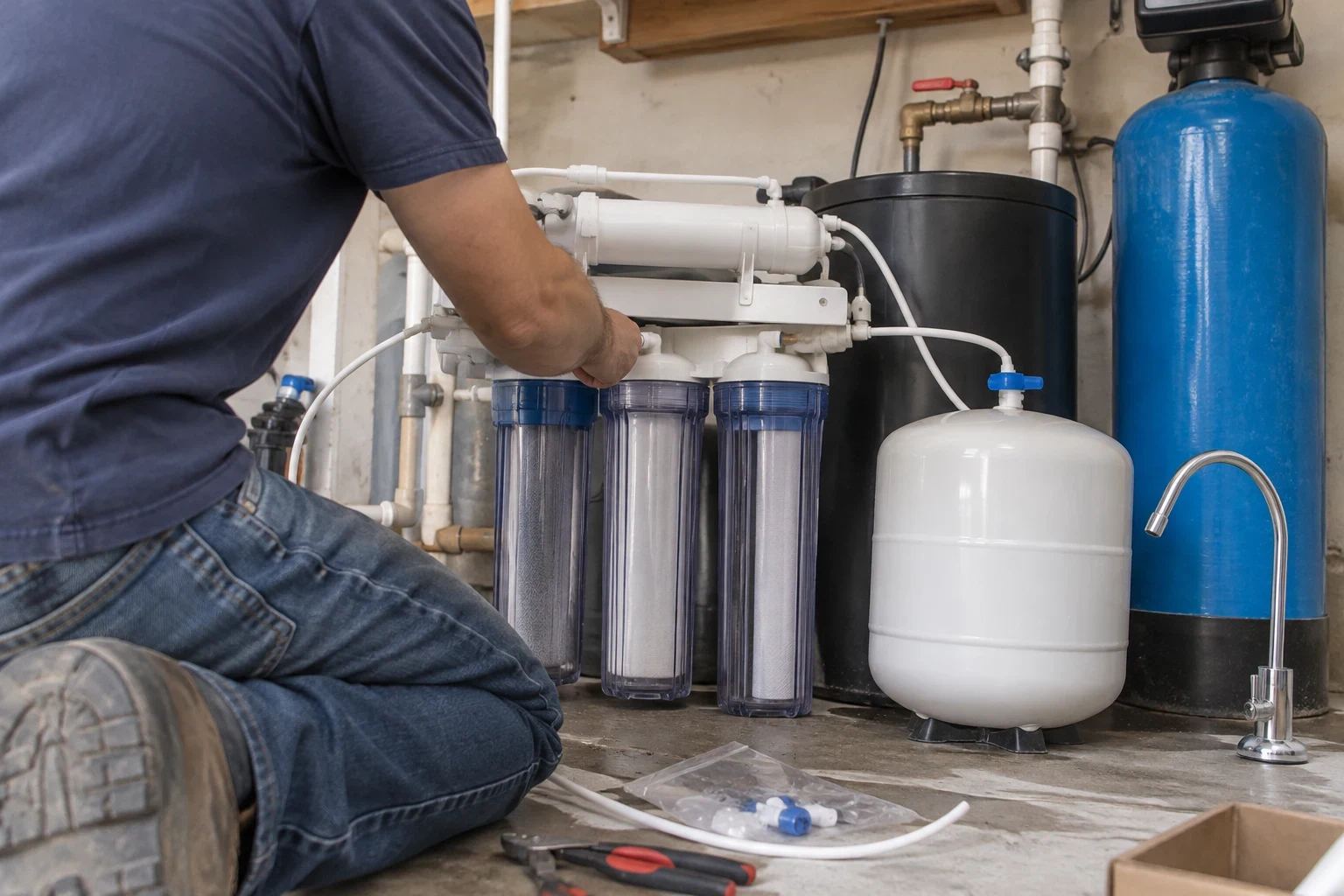
In reverse osmosis, household pressure pushes water across a membrane so fine that dissolved salts, hardness minerals and most trace metals cannot pass. The purified water, known as permeate, fills a small pressurized tank under the sink. The leftover concentrate, now carrying those minerals, goes down the drain. That steady rinse is what keeps the membrane open.
Water in the West Valley is high in dissolved minerals, so the difference is easy to notice: coffee and tea taste brighter, the kettle no longer grows a white crust and ice freezes clear. Keep in mind that RO treats a single tap. For scale in the water heater and showers, look at water softener installation or whole-home filtration alongside it.
Choose RO when your complaint is about the water you drink and cook with. It will not stop spots on shower glass. Before you buy anything, we sort out which problem you have so the equipment matches it.
Parts and Work in Every RO Install
Three filter stages
First, a sediment cartridge traps grit and flakes of old pipe scale. Next, carbon strips out chlorine and chloramine, which would otherwise attack the thin-film membrane. A final carbon cartridge cleans up taste just before the faucet.
Membrane housing and tank
We mount the membrane housing and a bladder storage tank so the tank stands upright and every cartridge can be changed without disconnecting tubing.
Supply valve and drain connection
The system gets its own shutoff on the cold line, so you can turn it off and still use the kitchen faucet. We fit the drain saddle above the P-trap, which keeps reject water from being pulled back toward the unit.
Its own faucet
The drinking faucet goes into an unused sprayer hole or a newly drilled hole in the sink deck or counter. If you want a second safeguard against backflow, we can fit an air-gap faucet.
Fridge hookup if you want it
We can branch tubing to the ice maker and water dispenser, with a separate shutoff. On a long run, a permeate pump helps hold flow at the fridge.
Signs You Would Benefit From RO
- You buy bottled water every week
- Cases of bottled water mean your tap water is failing a taste test. An RO faucet delivers the same kind of low-mineral water on demand.
- White crust in the kettle
- Mineral scale in kettles, coffee makers and humidifiers comes from dissolved calcium and magnesium. RO water leaves almost none of it behind.
- Chlorine taste or smell
- A pool-like note in a glass of water is the disinfectant doing its job, but you do not have to drink it. The carbon stages remove it before the membrane.
- Cloudy ice and spotted glasses
- Minerals freeze out as white cores in ice cubes and dry as spots on glassware. Both clear up once drinking water runs through the membrane.
- An old system that drips or runs constantly
- A cracked filter housing, a weeping quick-connect fitting or a failed shutoff valve that never stops sending water to the drain all point to replacement. Catch it before the cabinet floor swells.
What Happens on Install Day
- 1
A quick call first
On the phone we go over your sink, what the counter is made of, how much room the cabinet has and whether the fridge needs a line. Those answers decide the parts we load on the truck.
- 2
Photos and floor protection
We take pictures of the cabinet and the plumbing inside it before any work starts, then put down a mat and towels. When an old unit is being replaced, the photos show the shape it was in.
- 3
Mounting and plumbing
The filter bracket and tank go in first, followed by the supply valve and drain saddle. Then we set the faucet and run the tubing in wide curves so it cannot pinch against the disposal or a pull-out bin.
- 4
Flush and leak check
We rinse the carbon cartridges and send the first full tank to drain to wash out the membrane's storage solution. With the system at full pressure we inspect each fitting for weeping, then use a dissolved-solids meter at the faucet to confirm the membrane is doing its job.
- 5
Cleanup and handoff
Packaging and any old parts leave with us, and the cabinet is wiped dry. We point out each shutoff and label which cartridge is which, so filter changes are simple later.
What Moves the Price of an RO Install
Most of what you pay for reverse osmosis comes down to your kitchen: the countertop material, the space inside the sink cabinet and the distance the water has to travel. When you call, we split the job into parts and labor so you can see each line. If we open the cabinet and find something unexpected, we stop, show you, and let you decide before any extra work happens.
- Countertop and sink deck
- An unused sprayer hole or a stainless deck takes only minutes to prep for the faucet. Stone surfaces like granite and quartz are different: we cut them with a diamond bit at low speed to avoid chipping, and that extra time shows up as labor.
- System configuration
- A standard four- or five-stage unit keeps parts costs down. Options such as a permeate pump, a remineralizing cartridge or a larger storage tank each add to the parts line.
- Refrigerator connection
- Sending RO water to the ice maker and door dispenser takes more tubing, extra fittings and its own shutoff. Runs that are long or pass through several cabinets add installation time.
- Removing an existing unit
- Pulling out a failing system, capping its old drain saddle and swapping a worn supply valve all take longer than setting up in an empty cabinet.
Reverse Osmosis FAQs
- Does an RO system waste water?
- Every RO unit sends some concentrate to the drain, because that flow carries the rejected minerals away from the membrane surface. The amount depends on your household water pressure and the unit's design. A permeate pump lowers that reject flow noticeably. Feeding the system softened water also reduces membrane fouling and extends its life.
- How often do the cartridges need changing?
- Expect to replace the sediment and carbon prefilters and the final polishing filter about once a year, sooner if heavy sediment clogs them early. The membrane usually lasts several years when the carbon ahead of it is kept fresh. Slow tank recovery or a returning mineral taste are signs it is time.
- Should I install a water softener before adding RO?
- RO does not require a softener. Hardness minerals will scale the membrane faster, though. If you already see scale in the water heater and on fixtures, water softener installation treats every tap in your home and protects the membrane too. If your only concern is what you drink, RO alone does the job.
- Water from my old RO unit damaged the cabinet. Will you document it for insurance?
- Yes, we can document the failure and the damage. We photograph the failed component, such as a cracked housing or a loose quick-connect, the route the water traveled and the condition of the cabinet floor, then write up what happened for you to share with your insurer. Your adjuster and policy decide coverage, so we will not predict the result.
- Can I get an RO faucet that matches my kitchen?
- Yes. Drinking faucets are made in common finishes such as chrome, brushed nickel and matte black. Tell us your finish on the phone and we will bring it or the closest available match.
Ready for Better Drinking Water?
Tell us about your sink and countertop, and we will lay out the parts and the plan over the phone. We serve Tolleson and nearby towns including Avondale, Goodyear and Litchfield Park.