ServicesWhole-Home Filtration
Whole-Home Filtration in Tolleson
Our carbon filtration systems treat water at the point it comes into your home, which means the chlorine flavor and odor are removed before they reach the kitchen faucet, the shower or the washing machine. We match the tank to your peak flow and plumb in a bypass, so pressure stays where it should.
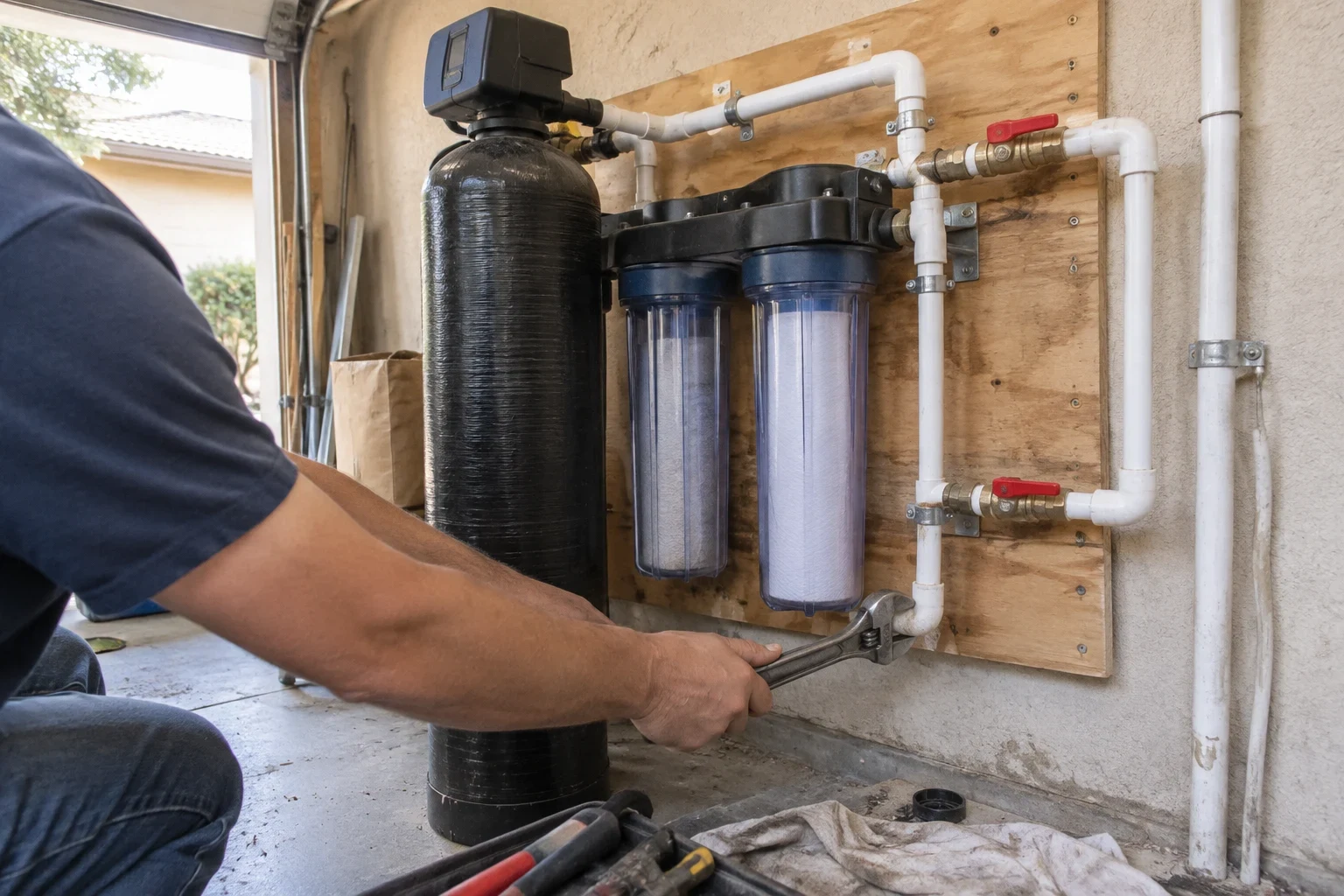
What a whole-home filter does, and what it does not
Municipal water carries a chlorine-based disinfectant so it stays safe across miles of distribution pipe. That protects public health, and the leftover residual is what you notice in a steamy shower or a glass from the tap. A whole-home filter passes that water through activated carbon, which adsorbs the chlorine before any fixture sees it. If your utility uses chloramine instead, we specify catalytic carbon, since ordinary granular carbon breaks chloramine down far more slowly.
Hardness is a separate problem. The calcium and magnesium behind spotted glassware and scaled showerheads pass straight through a carbon bed; removing them takes ion exchange in a softener. Plenty of West Valley homes run both, with the filter placed first so chlorine never reaches the softener resin. Our water softener installation page explains that half of the setup, and a reverse osmosis system under the sink adds drinking water with the dissolved minerals taken out.
What the work includes
Sizing to your flow rate
Activated carbon only works if water spends enough time in contact with it. We size the media to your home's peak demand in gallons per minute, so a dishwasher and two showers at once still draw filtered water.
Sediment prefilter
A sediment stage traps sand, grit and flakes of pipe scale ahead of the carbon. Without it the carbon bed fouls early and has to be replaced sooner.
Carbon tank and control valve
Depending on drain access and how much media your home needs, we fit an upflow tank that never backwashes or a backwashing tank run by a timed control valve. We tell you which one we chose and the reason.
Bypass and matched fittings
A bypass valve goes in on every install, so water keeps flowing to the house when the filter is serviced. Where a softener loop exists we tie into it; otherwise we cut into the main line using fittings made for your copper or PEX.
Photos of what we find
If an old filter housing has cracked or a fitting has been leaking onto drywall or a garage slab, we photograph it and note what failed. Those notes can go to your insurance company. We do not act as the adjuster or guess what a policy will pay.
Signs your home needs whole-house filtration
Shower steam that smells like bleach
Chlorine leaves hot water as a gas, which is why the bathroom is usually the first place people catch it. Carbon at the main line pulls it out before water gets to the showerhead.
Tap water that tastes like a pool
If the household keeps buying bottled water because the tap tastes wrong, treating water where it enters fixes every faucet at once instead of one pitcher.
Grit in aerators and screens
Fine particles building up in faucet aerators, the washing machine inlet screen or the ice maker line are the kind of debris a sediment stage would stop.
An aging cartridge housing
Plastic canister housings discolor and crack over the years, and their O-rings stiffen. A slow drip below a housing is worth dealing with before it stains the floor or soaks a cabinet.
A softener with tired resin
Chlorine gradually degrades softener resin. If your softener is failing earlier than it should, a carbon stage in front of the next one helps it last.
How an installation runs
- 1
A phone conversation first
You describe what you notice in the water, where the main line or softener loop sits and what equipment is already there. With that, we arrive with a solid idea of which system fits.
- 2
A look at your plumbing
We note pipe diameter, where the shutoff is, whether a drain and outlet are nearby, and how much room the loop leaves. You then get a written quote that lists each part.
- 3
Install day
We close the main, cut in the bypass and the filter, and pressure test each joint before opening the water back up. Most jobs take part of a day, and the water is off only while the pipes are open.
- 4
Flush and handoff
Fresh carbon sheds fine black particles, so we run the tank to drain until the discharge comes out clean. Then we show you how the bypass works, where the prefilter is and when each part is due for service.
What moves the cost
Two things set the price: the system you choose and the plumbing it has to tie into. Our written quote separates parts from labor, line by line, so every charge is visible before you say yes.
- Media type and volume
- Catalytic carbon is priced higher than standard granular carbon. A home with more bathrooms also needs a larger tank to hold enough media for proper contact time.
- Upflow or backwashing tank
- A backwashing design brings a control valve, a drain line and an electrical outlet into the job. An upflow tank needs none of those, but it fits fewer homes.
- Loop or main-line cut-in
- A home with a pre-plumbed softener loop is the straightforward case. Cutting into the main line, or working in a cramped garage corner or utility closet, adds fittings and labor time.
- Pairing with a softener
- Putting in filtration and a softener on one visit avoids paying for the same plumbing work twice on separate trips.
Whole-home filtration questions
Something not covered here? (623) 246-4434
Will a whole-home filter soften my water?
No. Carbon targets chlorine, taste and odor, and the hardness minerals pass right through it. If scale is building up on fixtures, a softener handles that part, and we can put both in during the same visit.
Does a filter lower my water pressure?
When the tank is sized to your home, pressure at the fixtures should stay about where it was. Noticeable drops usually trace back to an undersized tank or a cartridge packed with sediment. That is why we match media volume to your peak flow and put a sediment stage up front.
How often does the carbon need replacing?
Carbon life comes down to two things: how many gallons your home runs through the tank and how much chlorine arrives with them. The sediment cartridge is the quick-turnover part and gets changed every few months. The carbon bed lasts far longer before the media is spent. At the walkthrough we give you a service schedule built for your system.
Will homeowners insurance pay for a filtration system?
Most policies treat a new filter as an improvement rather than a covered loss. Insurance becomes relevant when a failed housing or fitting has caused water damage. In that case we photograph the damage and write down what failed so your claim has clear records, but coverage is the adjuster's decision.
Where does the system go in my home?
Most often in the garage, either at the softener loop or close to the main shutoff, so every fixture downstream receives treated water. Without a loop, we pick the cleanest spot to cut into the main line and walk you through it before any pipe is cut.
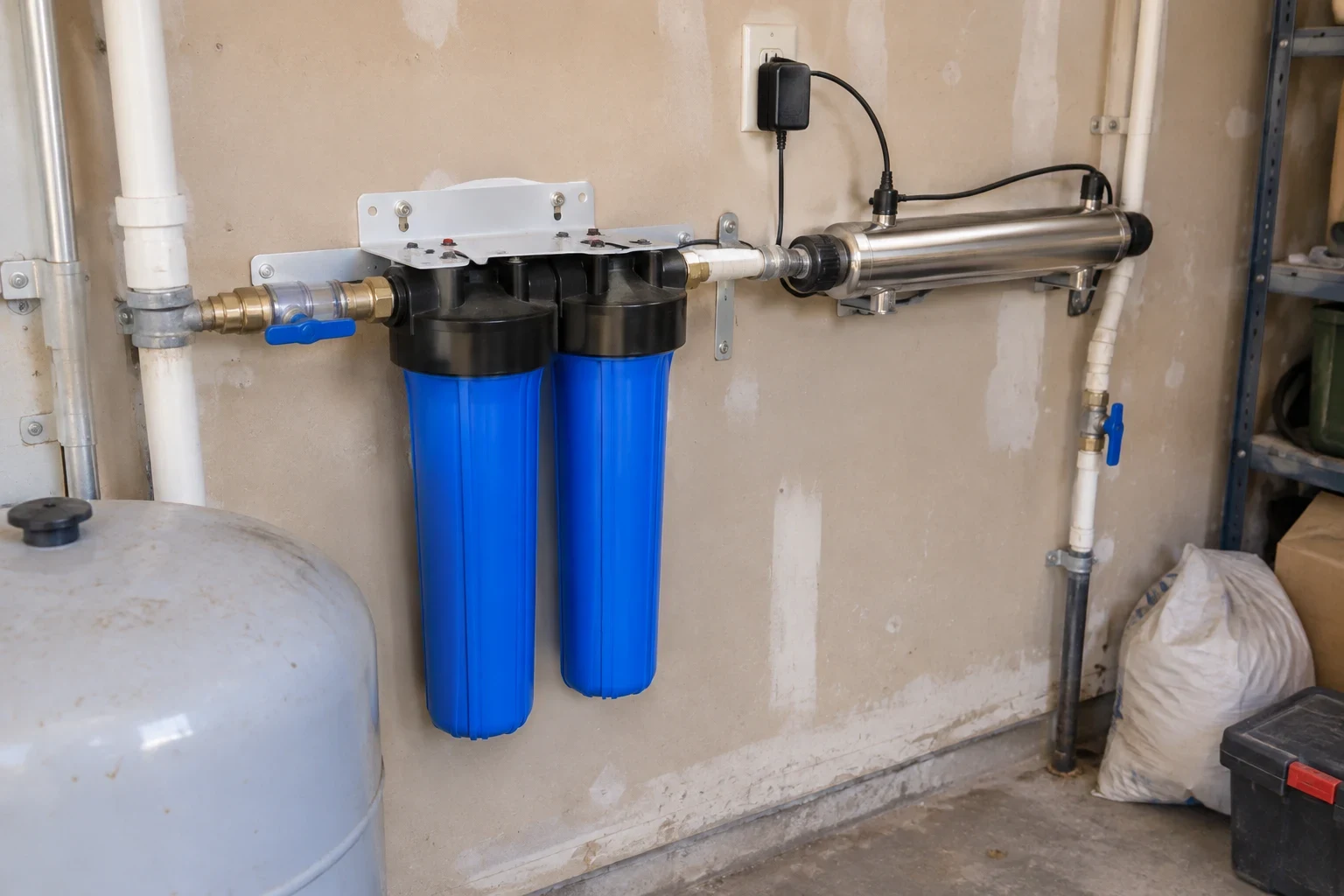
Get chlorine out of every tap
Tell us what you notice in your water and where your plumbing comes in, and we will recommend a system sized for your home. We serve Tolleson and nearby towns including Avondale, Goodyear and Litchfield Park.